

Key Takeaways
Personal Budget
A personal budget is a written or digital plan that shows how much money you expect to receive in a given period and how you intend to spend or save it. It maps your income against your expenses so you can see - before the month is over - whether you're living within your means. Think of it as a financial snapshot that gives you deliberate control over your money rather than wondering where it went.
In personal finance, a budget is sometimes called a "spending plan" to emphasize its forward-looking, intentional nature rather than a sense of deprivation or strict limitation.
The Core Idea: A Plan, Not a Punishment
Most people who resist budgeting have the wrong mental image. They picture a strict ledger that says no to everything enjoyable. In reality, a personal budget is simply a written agreement you make with yourself about where your money will go before you spend it.
The Federal Reserve's research on household finances consistently shows that people who plan their spending feel more financially secure - not because they earn more, but because they have greater clarity about their situation. That clarity is what a budget delivers.
A budget has two sides: income (what comes in) and expenses (what goes out). When you write both down and compare them, one of three things becomes apparent: you're spending less than you earn, spending more than you earn, or spending almost exactly what you earn. Each outcome calls for a different response - but you can only know which situation you're in once you look.
Start Simple, Then Refine
If you've never budgeted before, start with just three categories: fixed expenses (rent, insurance, loan payments), variable necessities (groceries, utilities, gas), and everything else. Tracking even these broad buckets for one month gives you far more clarity than starting with nothing. Complexity can come later once the habit is established.
For a practical walkthrough on turning this concept into an actual plan, see our step-by-step first budget guide.
What a Budget Is Not
Clearing up common misconceptions matters because they stop people from starting. A budget is not:
- A sign that you're broke. Budgeting is a tool used by people at every income level, including those with significant wealth. High earners who don't plan their spending can still run into financial trouble.
- A permanent, unchangeable document. A budget should be revised as your life changes - new job, new rent, growing family, unexpected expense. Treating it as fixed is the fastest way to abandon it.
- A record of the past. A budget looks forward. If you're only adding up what you already spent, you're tracking, not budgeting. Both are valuable, but they serve different purposes.
- Something that requires special software. A notebook, a spreadsheet, or even a notes app on your phone is sufficient. The tool matters far less than the habit.
If you've tried budgeting before and felt like it failed you, our companion piece on common budgeting myths addresses the assumptions that most often derail beginners.
Budgeting Looks Different for Everyone
There is no single correct budgeting method. Zero-based budgets, envelope systems, and percentage-based frameworks all have genuine trade-offs depending on income stability, lifestyle, and personal preference. What works for one household may not suit another. The goal is to find an approach you'll actually maintain - not the one that looks best on paper. Our article on the trade-offs of strict budgeting explores this tension directly.
How Budgets Actually Work in Practice
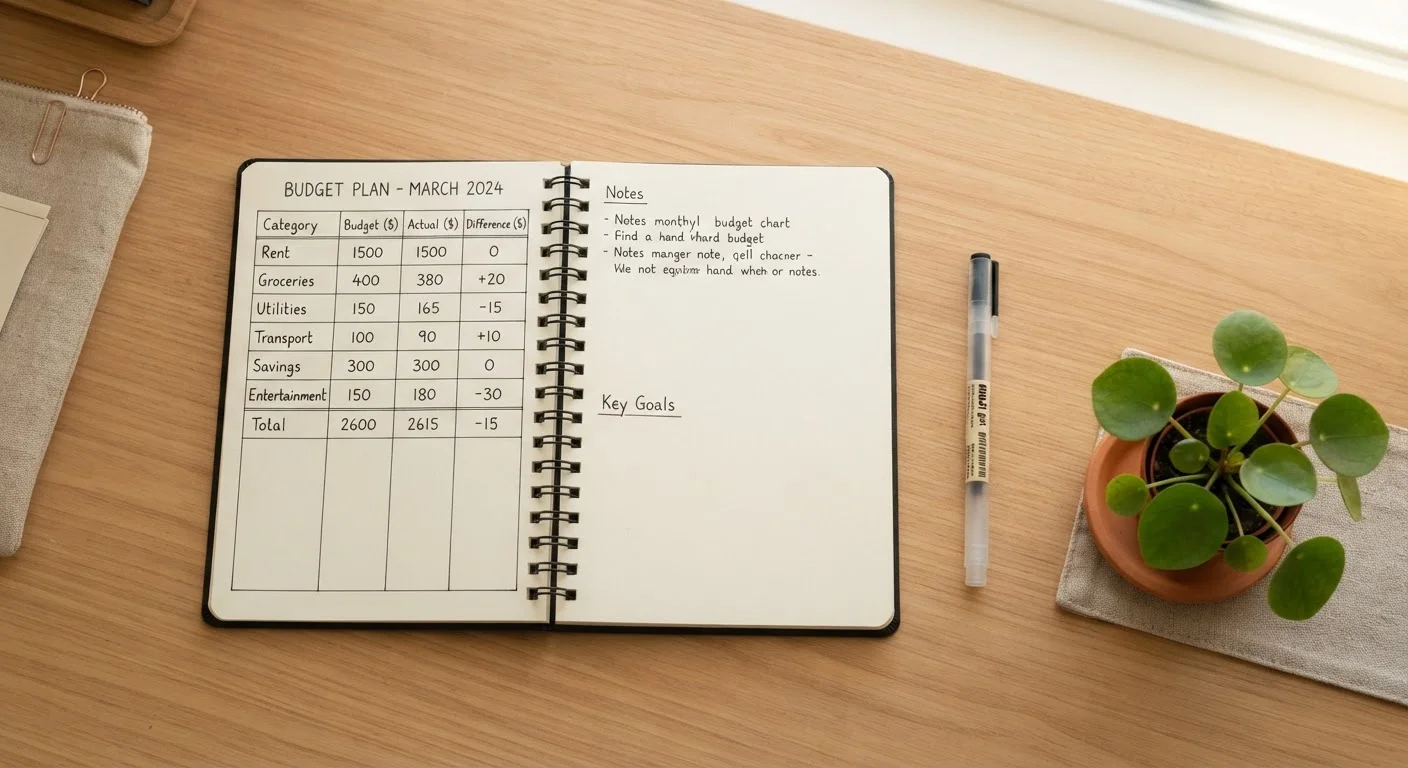
Budgets work by creating categories for your money before it's spent. Common categories include housing, transportation, groceries, utilities, debt payments, savings, and discretionary spending. You assign a dollar amount to each category based on your income, then compare actual spending against those targets throughout the month.
The most widely referenced framework is the 50/30/20 guideline - allocating roughly 50% of after-tax income to needs, 30% to wants, and 20% to savings and debt repayment. This is a starting point, not a rule carved in stone. High housing costs in some cities, for example, make a strict 50% needs allocation unrealistic for many households.
~33%
Americans with a detailed household budget
Gallup polling has found that only about one in three Americans maintains a detailed monthly budget, despite widespread awareness of its benefits.
74%
People reporting financial stress reduction after budgeting
According to NFCC (National Foundation for Credit Counseling) survey data, a large majority of people who began budgeting reported reduced financial stress within several months.
What makes a budget effective isn't the specific percentages - it's the act of deciding intentionally. Even a rough monthly plan puts you ahead of having no plan at all. For those navigating tight financial circumstances, our guide on budgeting when money is tight offers a grounded starting point.
For a comprehensive look at building and maintaining a budget from the ground up, the complete personal budgeting guide covers everything from calculating take-home pay to managing irregular income.
This article is for general informational and educational purposes only and does not constitute personalized financial advice. Consult a qualified financial professional for guidance specific to your circumstances.