

Key Takeaways
Fixed, Variable, and Periodic Expenses
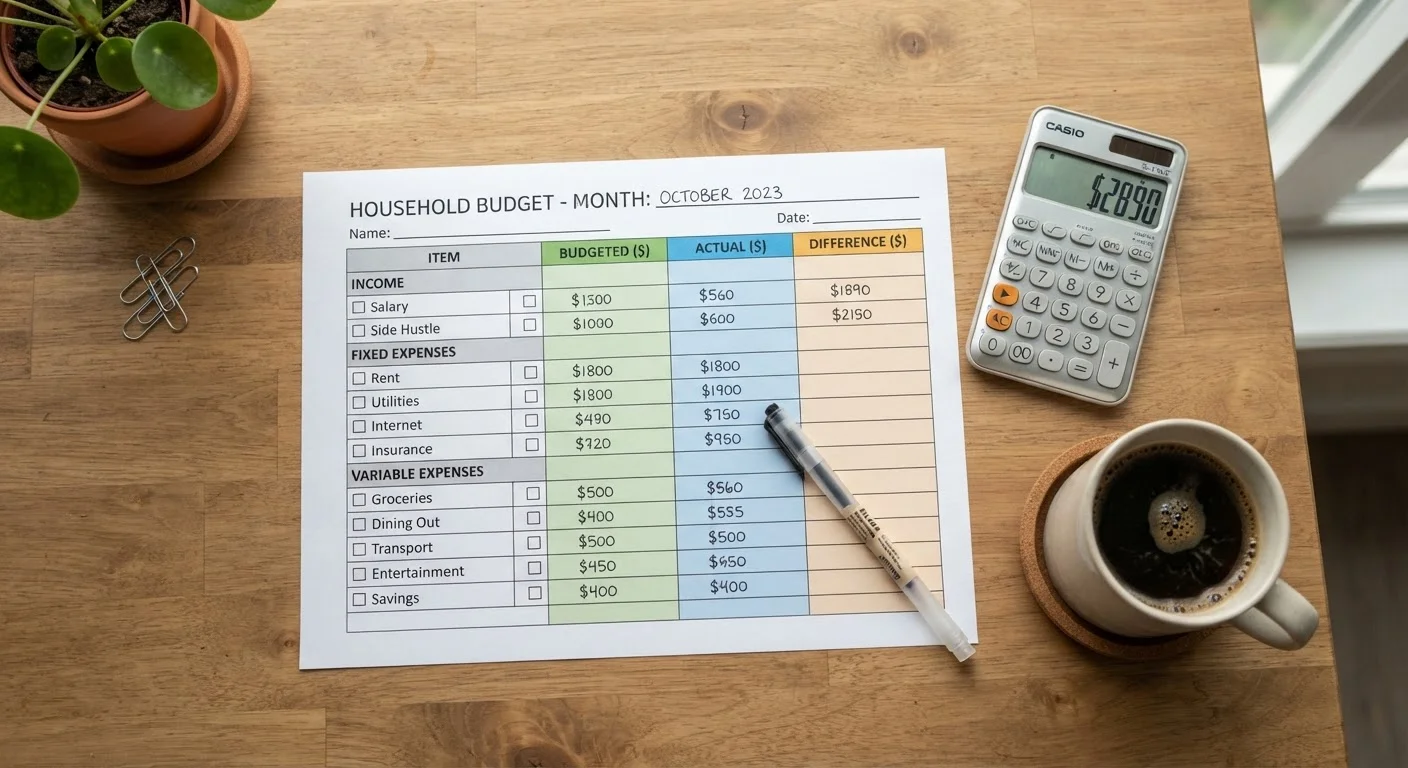
These are the three fundamental categories of spending in a personal budget. Fixed expenses stay the same amount every month (like rent). Variable expenses change month to month (like groceries). Periodic expenses are predictable but don't hit every month (like car registration). Recognizing which type each bill belongs to makes it far easier to plan and avoid shortfalls.
In accounting, 'fixed' and 'variable' costs refer to how expenses respond to output volume - a related but distinct concept from the personal budgeting definitions used here.
Why Expense Categories Matter Before Anything Else
Most budget breakdowns fail before they start because they treat all spending as interchangeable. You list your income, subtract your bills, and assume whatever is left is yours to spend. The problem is that not all bills behave the same way - and the month you forget that is usually the month an unexpected charge wipes out your cushion.
Understanding fixed, variable, and periodic expenses isn't accounting jargon. It's the practical foundation that lets you build a budget that holds up not just in January, but through car registration month, holiday season, and every other irregular cost the year throws at you. See our complete personal budgeting guide for a full framework that builds on these categories.
Fixed Expenses: The Predictable Core
A fixed expense is any cost that remains the same amount every billing cycle. You know exactly what it will be, and it hits on a consistent schedule. Rent or mortgage payments, car loans, student loan minimums, and most insurance premiums are classic examples. Subscription services with a flat monthly rate also qualify.
Fixed expenses are the easiest to budget because there's no guesswork. List them, add them up, and that total is a non-negotiable floor in your monthly plan. The main risk with fixed costs isn't the amount - it's over-committing. When too large a share of your income is locked into fixed obligations, you have little flexibility when variable or periodic costs spike.
Watch Your Fixed Expense Ratio
If your fixed expenses consume more than 50-60% of your take-home pay, you have limited room to absorb variable spikes or save for periodic costs. Over time, look for opportunities to reduce fixed commitments - such as refinancing a loan, renegotiating a subscription, or downsizing a recurring service - to give your budget more breathing room.
A practical rule of thumb: if your fixed expenses consume more than 50-60% of your take-home pay, consider which commitments might be renegotiable over time - such as refinancing a loan or reviewing recurring subscriptions.
Variable Expenses: The Moving Target
A variable expense changes in amount from month to month, typically based on usage, behavior, or prices. Groceries, gas, utilities, dining out, clothing, and entertainment all fall into this category. Even if you buy groceries every week, what you spend varies.
Variable expenses are where most people's budgets go off course - not because the category is a surprise, but because the amount is. The solution is to track several months of actual spending in each variable category, calculate a realistic average, and set a monthly target based on that data rather than a wish.
33%
Americans with no monthly budget
According to a survey by the National Foundation for Credit Counseling, roughly one in three Americans does not maintain any kind of household budget.
$1,000+
Typical annual periodic expense gap
Consumer finance researchers commonly find that households underestimate irregular annual costs by $1,000 or more when those costs aren't explicitly planned for in a monthly budget.
60%
Adults who experienced unexpected expenses
Federal Reserve survey data has found that a majority of U.S. adults report facing a significant unexpected expense in any given year, underscoring the importance of planning for variable and periodic costs.
When you spend less than your target in a variable category one month, move the difference into a small buffer rather than treating it as free money. That buffer covers the months when costs inevitably run higher than expected.
Periodic Expenses: The Budget's Blind Spot
A periodic expense is one that you know will come, but not every month. Annual or semi-annual costs - car registration, property taxes, holiday gifts, back-to-school shopping, medical deductibles, or quarterly insurance premiums - are all periodic. They are predictable in nature, just not in timing relative to the monthly budget cycle.
Periodic costs are by far the most overlooked category in basic budgets. Because they don't show up on the same month-to-month rhythm as other bills, it's easy to treat them as emergencies when they arrive - and then scramble to cover them. The most effective approach is a sinking fund: a dedicated savings bucket where you set aside a fixed amount each month specifically to absorb these costs when they land.
For example, if your car registration costs $240 per year, set aside $20 each month. By the time the bill arrives, the money is already there. For a deeper look at terms like this, the plain-English budgeting glossary is a useful reference.
Sinking Funds vs. Emergency Funds
A sinking fund and an emergency fund serve different purposes. A sinking fund is earmarked for known future expenses - car registration, annual premiums, holiday gifts. An emergency fund covers genuinely unexpected events like job loss or sudden medical costs. Both are worth maintaining, but money saved for a known periodic expense should not be counted as part of your emergency reserve.
Putting All Three Together in a Working Budget
A realistic budget accounts for all three types of spending simultaneously. Start by listing every fixed expense - these are your confirmed monthly commitments. Then estimate each variable category using historical averages, not optimistic guesses. Finally, inventory every periodic cost you expect over the next 12 months, divide each by 12, and include that monthly installment in your plan.
The result is a budget that reflects how money actually flows - not just the bills that happen to land in a given month. Over time, as you track spending and adjust category targets, the gap between what you plan and what you actually spend narrows significantly. That consistency is what makes a budget last beyond the first few weeks of the year.
This article is for general informational and educational purposes only and does not constitute personalized financial advice. Consider consulting a qualified financial professional for guidance specific to your situation.