

Key Takeaways
Oil Degradation
Motor oil breaks down over time and mileage, losing its ability to lubricate, cool, and clean engine components. When oil degrades, it thickens, accumulates contaminants, and can no longer form a protective film between metal surfaces. The result is increased friction, heat, and wear - all of which accelerate engine damage.
Oil oxidation, viscosity breakdown, and additive depletion are the three primary degradation mechanisms. Modern synthetic oils resist these processes longer than conventional oils, but no oil lasts indefinitely.
What Oil Actually Does Inside Your Engine
Motor oil serves four critical functions simultaneously: it lubricates moving metal parts, helps dissipate heat, suspends and carries away contaminants, and protects against corrosion. Without a continuous, clean supply of oil circulating through the engine, metal components grind against each other with no protective barrier.
Fresh oil is amber-colored and flows easily. As it works, it absorbs combustion byproducts, metallic particles, and moisture. Chemical additives in the oil - detergents, antioxidants, and viscosity modifiers - gradually deplete as they do their job. What remains is progressively less capable of doing anything the engine needs from it.
“Oil is the lifeblood of the engine. When it breaks down, everything else follows. The engine doesn't fail all at once - it wears out incrementally, and most of that wear is invisible until it isn't.”
— Automotive Engineering Principle, Widely cited in mechanical engineering and automotive maintenance literature
The Timeline of Neglect: What Happens Mile by Mile
The consequences of skipping an oil change don't arrive all at once - they accumulate. Here's how the damage typically progresses:
- Early overdue (500-1,500 miles past interval): Oil is darker and more acidic. Cleaning additives are largely depleted. Contaminant particles remain suspended in oil rather than being flushed out.
- Moderately overdue (1,500-3,000 miles past interval): Viscosity increases as oil thickens. Oil passages may begin to restrict, reducing flow to critical components like camshafts and crankshaft bearings.
- Severely overdue (3,000+ miles past interval): Sludge begins forming on engine surfaces. Oil pressure can drop, triggering the oil pressure warning light. Metal-on-metal contact increases wear exponentially.
Sludge is the most destructive endpoint. It blocks the narrow oil passages that feed high-stress components and insulates heat rather than dissipating it, creating a cycle of accelerating damage. See warning signs your car needs attention before damage progresses this far.
~40%
Of engine wear occurs at cold startup
Engineering research has consistently shown that a significant share of engine wear happens in the first moments after starting, when oil hasn't yet fully circulated - a problem worsened by degraded, thick oil.
$4,000-$10,000+
Typical cost of engine replacement
According to automotive repair industry data, replacing a failed engine is among the most expensive single repairs a driver can face - often exceeding the market value of older vehicles.
5,000-10,000 mi
Typical modern oil change interval
Most current vehicle manufacturers specify oil change intervals in this range for full synthetic oil under normal driving conditions, per owner's manual guidelines.
High Mileage and Older Engines: The Stakes Are Higher
Engines with more miles on them have naturally looser tolerances - small gaps between components widen as parts wear over time. These engines depend even more heavily on oil quality to maintain a protective film in those wider gaps. Skipping oil changes in a high-mileage vehicle doesn't carry the same risk profile as in a nearly-new engine; the damage threshold is lower and the consequences arrive sooner.
If keeping your vehicle running reliably past 150,000 miles is a goal, consistent oil changes are non-negotiable. Maintaining a high-mileage vehicle requires tighter attention to fluid health, not looser habits.
Check Your Oil Between Changes
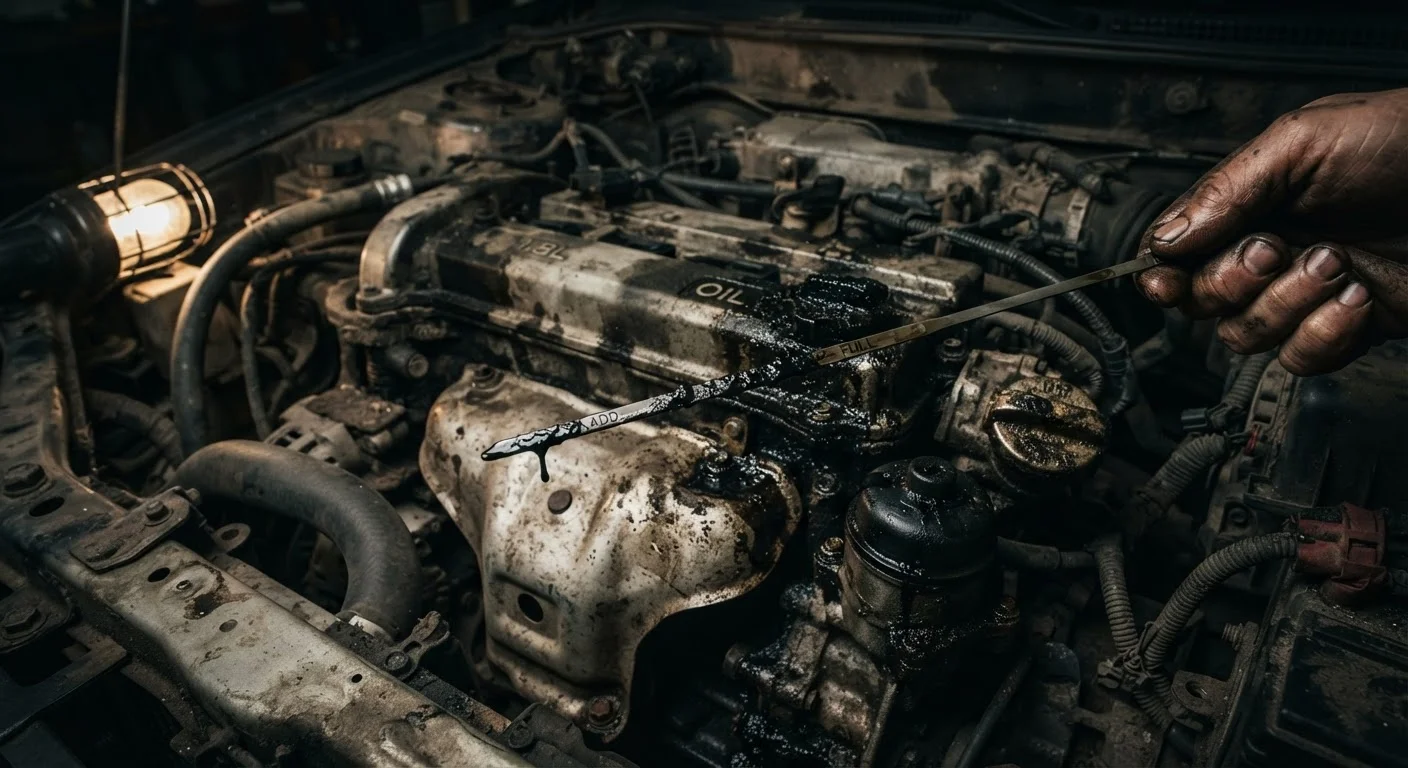
Pull the dipstick every month or before a long road trip. Look at both the level and the color - oil that's black and gritty is past its prime even if you haven't hit your mileage interval. Low oil level can also indicate a leak or consumption issue that needs professional attention.
Understanding Your Actual Oil Change Interval
The old "every 3,000 miles" rule persists in many drivers' minds, but it's outdated for most modern vehicles. Manufacturer-recommended intervals now commonly range from 5,000 to 10,000 miles depending on oil type, engine design, and driving conditions. The 3,000-mile guideline was developed for older engine designs and conventional oils - neither of which is standard today.
Your owner's manual is the authoritative source, not a sticker on your windshield. Many newer vehicles also include an oil life monitoring system (OLMS) that calculates remaining oil life based on driving data rather than just mileage. These systems are useful guides, but they can't account for every variable - particularly unusually harsh conditions like extended idling, towing, or dusty environments.
For a deeper look at how to read and use your vehicle's service schedule, see understanding your vehicle's scheduled maintenance intervals. And if you've absorbed myths about car care over the years, common maintenance myths that cost drivers money is worth reading alongside this article.