

| Typical title transfer window | 10-30 days from date of sale (Varies by state; check your state DMV) |
| States with no vehicle sales tax | Montana, Oregon, New Hampshire, Delaware, Alaska (General state tax law; local taxes may apply in some) |
| Federal odometer disclosure requirement | Required for vehicles under 10 years old (Federal Truth in Mileage Act) |
| Who holds title when financed | The lender, until the loan is paid in full (Standard lien practice across U.S. states) |
| Registration fee basis | Flat fee, vehicle value, weight, or age - depends on state (Varies by state motor vehicle statute) |
| Common required documents | Signed title, bill of sale, proof of insurance, photo ID (Standard across most U.S. states; verify locally) |
What Title Transfer and Registration Actually Mean
When a vehicle changes hands - whether through a dealership sale, private party transaction, or inheritance - two distinct legal processes must occur: title transfer and vehicle registration. Though often handled together, they serve different purposes and involve different documentation.
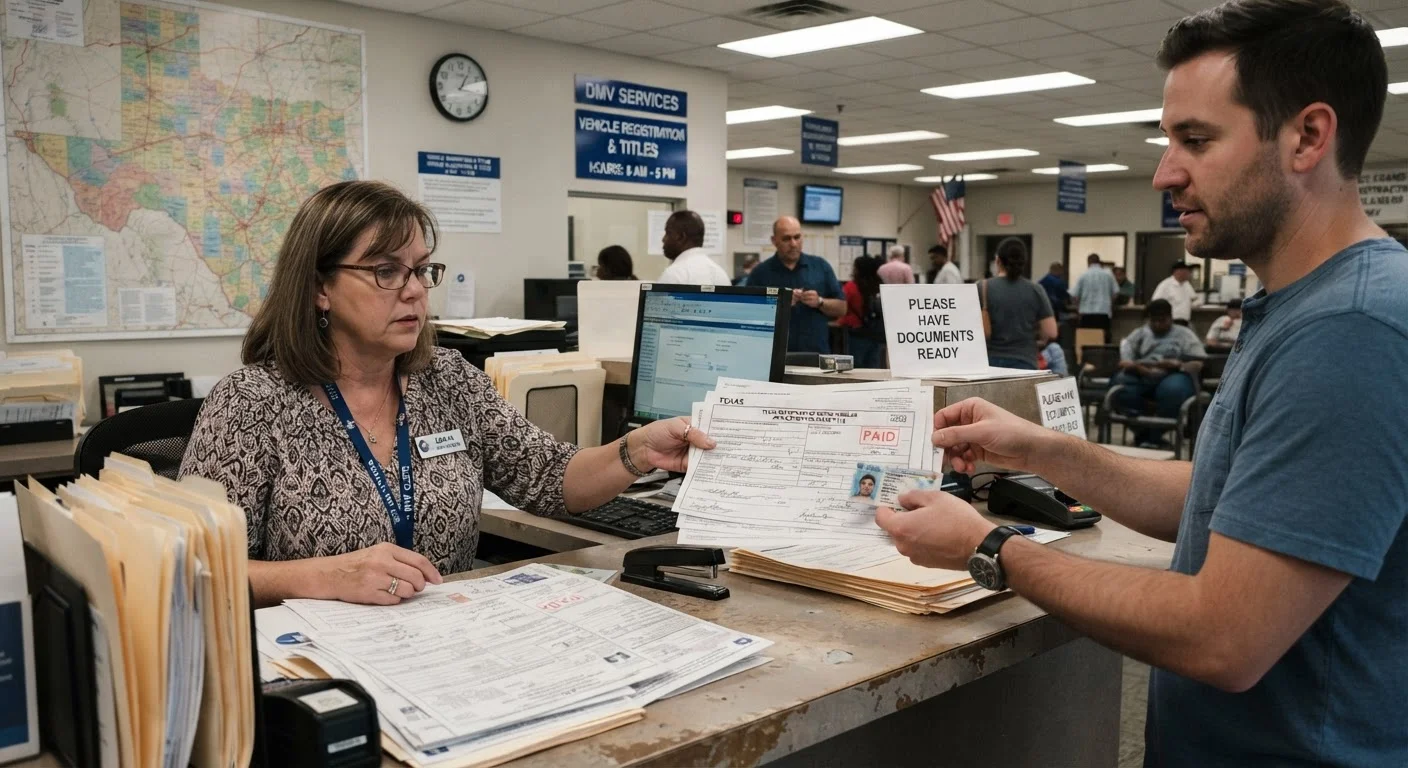
A vehicle title is the legal document that establishes ownership. Transferring the title from seller to buyer is what legally makes you the owner. Registration, by contrast, is the state's record that your vehicle is authorized to operate on public roads and is tied to an annual fee and license plate assignment.
For a broader look at what happens between signing paperwork and driving off the lot, see our walkthrough of the car buying process.
| Typical title transfer window | 10-30 days from date of sale (Varies by state; check your state DMV) |
| States with no vehicle sales tax | Montana, Oregon, New Hampshire, Delaware, Alaska (General state tax law; local taxes may apply in some) |
| Federal odometer disclosure requirement | Required for vehicles under 10 years old (Federal Truth in Mileage Act) |
| Who holds title when financed | The lender, until the loan is paid in full (Standard lien practice across U.S. states) |
| Registration fee basis | Flat fee, vehicle value, weight, or age - depends on state (Varies by state motor vehicle statute) |
| Common required documents | Signed title, bill of sale, proof of insurance, photo ID (Standard across most U.S. states; verify locally) |
How the Process Works: General Steps
While every state administers its own rules, the general sequence for a private-party vehicle purchase follows a recognizable pattern:
- Seller signs the title over - The current owner endorses the back of the title, recording the sale price, odometer reading, and buyer information.
- Buyer submits a title application - This goes to the state's motor vehicle agency (often the DMV or equivalent), along with a bill of sale, proof of insurance, and a government-issued ID.
- Fees are calculated and paid - These include a title transfer fee, registration fee, and in most states, a sales or use tax based on the purchase price.
- New title and registration are issued - Some states issue these the same day; others mail the title weeks later while issuing temporary operating permits.
Dealership transactions typically streamline this: the dealer collects fees and submits paperwork on the buyer's behalf, though processing timelines still vary by state.
Dealership Transactions vs. Private Party Sales
When purchasing from a licensed dealership, the dealer typically handles title paperwork, collects applicable taxes and fees, and submits everything to the state on your behalf. In a private party sale, both buyer and seller share responsibility for completing and submitting the correct documents. Errors or omissions in a private sale can delay or void the transfer, so confirm requirements with your state DMV before signing anything.
Key Variations Across States
No two states handle registration and title transfer identically. Here are the most significant variables to be aware of:
- Title transfer deadlines: Most states require the title to be transferred within 10 to 30 days of purchase. Some, like California, allow 30 days; others, like Virginia, set a 30-day window but assess late fees quickly. Missing deadlines can result in penalty fees.
- Sales and use tax rates: These range from zero (in states like Montana, Oregon, and New Hampshire) to more than 10% in high-tax localities. The rate is usually based on the vehicle's sale price or its assessed value, whichever is higher.
- Registration fee structures: Some states charge flat fees; others base fees on vehicle weight, age, or value. A newer, heavier vehicle can cost substantially more to register in certain states.
- Emissions and safety inspection requirements: Many states require a passing inspection before registration can be renewed or transferred. Requirements differ by vehicle age, county, and fuel type.
- Lien documentation: If the vehicle is financed, the lender typically holds the title until the loan is paid off. The lien must be noted on the title and released properly at payoff.
Registration fees are one of the vehicle ownership costs that many buyers underestimate. For a broader financial picture, see our article on car ownership costs most drivers don't budget for.
Where to Verify Requirements in Your State
Because requirements change - and vary further at the county level in some states - always verify current rules directly with your state's official motor vehicle agency before completing a transaction. Most state DMV websites publish current fee schedules, required documents, and online appointment tools.
Key documents to gather in advance for most states:
- Signed certificate of title from the seller
- Completed title application form (available from your state DMV)
- Bill of sale showing purchase price and date
- Proof of valid auto insurance
- Government-issued photo ID
- Odometer disclosure statement (federally required for vehicles under 10 years old)
If you're financing your purchase, your lender will also provide instructions specific to their lien-recording process. For a complete picture of how auto financing affects ownership paperwork, our auto loan basics guide covers the mechanics in plain terms.
For a single resource covering every stage of the buying process - from budgeting through final registration - refer to our complete roadmap to buying a car in the U.S..